

Introduction
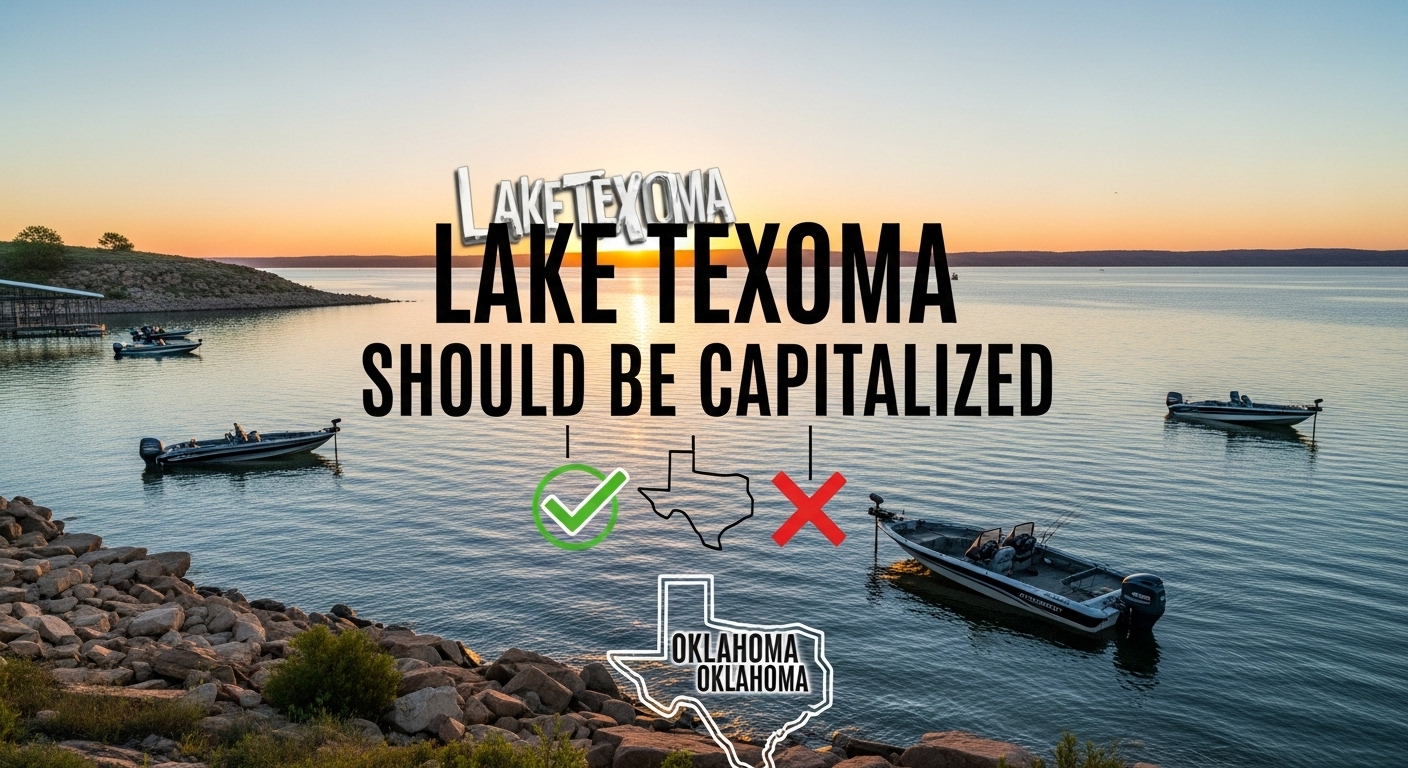
Understanding why Lake Texoma Should Be Capitalized is an important part of writing clearly and professionally, especially when dealing with place names, geographical features, and travel-related topics. Capitalization may seem like a small detail, but it shapes how readers interpret information. When a proper noun like Lake Texoma is written incorrectly in lowercase, it loses the uniqueness that defines it as a specific landmark. Early in any writing process, identifying which words function as proper nouns ensures that your content appears polished, trustworthy, and aligned with established English conventions.
Exploring why Lake Texoma Should Be Capitalized also reveals how grammar rules interact with real-world communication needs. Many people assume that words like “lake” are always generic; however, English treats the term differently when it forms part of a formal name. Capitalization signals that Lake Texoma is not just any lake—it is a distinct, widely recognized reservoir on the Texas–Oklahoma border. Writers, editors, students, and content creators who understand these distinctions strengthen their messaging and avoid common errors that weaken credibility.
Lake names across the United States follow consistent rules, but Lake Texoma stands out due to its regional importance, tourism appeal, and frequent appearance in outdoor recreation writing. Whether you’re preparing a travel guide, publishing an article about fishing regulations, or creating SEO-focused content, using the correct capitalization helps readers follow your message without confusion. As you move through this article, you’ll discover not only the grammatical reasoning behind proper capitalization but also how accurate naming improves search performance, enhances professionalism, and supports reader comprehension.
By the time you reach the end of this guide, you’ll fully understand why Lake Texoma Should Be Capitalized and how following proper noun rules elevates your writing. This foundation will help you apply the same principles to other place names, making your work clearer, more consistent, and more authoritative in every context.
Why Lake Texoma Should Be Capitalized
Lake Texoma Should Be Capitalized because it is a proper noun identifying a specific geographic landmark rather than a general type of lake. In English, all proper nouns—whether they reference mountains, rivers, cities, or lakes—receive capital letters to show that they name unique entities. When someone writes “lake texoma,” the lowercase letters unintentionally suggest a generic location instead of the well-known reservoir on the Texas–Oklahoma border. Capitalization marks the name as official, specific, and distinct, helping readers immediately recognize its importance and relevance.
Correct capitalization also matters for clarity and professionalism. If a fishing report, travel guide, or state park brochure uses the lowercase version, readers may question the accuracy or authority of the content. This confusion affects everything from tone to credibility. Lake Texoma Should Be Capitalized because doing so preserves meaning, ensures consistency, and maintains the standards expected in formal, academic, and commercial writing. When writers commit to correct usage, they reinforce trust and demonstrate an understanding of established linguistic conventions.
Read More: Basqueserpartists
Understanding Proper Nouns in Geographic Naming
Proper nouns in geographic naming always require uppercase treatment, and Lake Texoma is no exception. English uses capitalization to distinguish between general terms and specific, named locations. For example, “mountain” is generic, but “Mount Rainier” is not. Similarly, “lake” is generic, but “Lake Texoma” identifies a particular body of water. This pairing of a descriptor and a unique name is common across English geography: Lake Superior, Lake Tahoe, and Lake Michigan follow the same rule. Using lowercase breaks the established pattern that helps readers instantly recognize proper names.
This grammatical structure exists to maintain consistency within the language. When you understand the logic behind treating geographic names as proper nouns, the rule becomes intuitive. Whenever “Lake” forms part of the official name, both words receive capitalization. Recognizing that Lake Texoma Should Be Capitalized reinforces accuracy in written communication. These conventions support effective navigation, clear research writing, and professional presentation in print and digital materials.
How Style Guides Treat Lake Texoma
Major style guides agree that Lake Texoma Should Be Capitalized. The Associated Press (AP) Stylebook, Chicago Manual of Style (CMOS), Modern Language Association (MLA), and American Psychological Association (APA) all instruct writers to capitalize every major word in a proper noun. Because Lake Texoma is an official place name, both words require uppercase treatment in headlines, body text, captions, and citations. These guides provide the backbone for professional writing standards used by journalists, authors, students, and content creators nationwide.
This consistency matters because organizations rely on standardized language to maintain a cohesive voice. Tourism boards, park services, scientific agencies, and state departments all follow these capitalization rules to ensure clarity across reports, maps, and public communications. If even one reference to Lake Texoma appeared in lowercase, it would break formatting expectations and potentially confuse readers. Style guide alignment strengthens the argument that Lake Texoma Should Be Capitalized in every form of professional writing.
Common Mistakes Writers Make
Writers commonly make the mistake of treating “lake” as a generic word even when it appears in a proper noun. This leads to incorrect forms such as “lake Texoma,” which breaks grammatical rules and disrupts the meaning of the name. Another frequent issue is inconsistency within the same document. A writer may capitalize correctly on first mention but revert to lowercase later. Such inconsistencies cause confusion and reduce the perceived quality of the writing. Recognizing that Lake Texoma Should Be Capitalized helps avoid these pitfalls and promotes clear communication.
Another mistake occurs when writers rely on drafts created in casual environments like text messages or voice-to-text transcription, where capitalization errors frequently slip through. These mistakes sometimes make their way into final projects if not carefully edited. Additionally, creative branding styles that emphasize minimalism may tempt writers to lowercase proper nouns for aesthetic effect. However, in informational, academic, or SEO-driven writing, accuracy takes precedence. Using the correct form emphasizes professionalism and helps maintain a consistent tone.
The Role of Capitalization in SEO and Discoverability
Accurate capitalization plays a meaningful role in search engine optimization. When Lake Texoma Should Be Capitalized in content, metadata, and headings, search engines are more likely to interpret it as a proper noun and match it correctly with user queries. Consistent capitalization also contributes to a sense of authority, which improves user engagement and ranking potential. Search engines evaluate formatting signals to understand page quality, and proper noun usage is one of the subtle details that contribute to better indexing and improved search relevance.
From the user’s perspective, capitalization enhances trust. Someone searching for information about Lake Texoma expects to see the name presented correctly. When search results display lowercase alternatives like “lake texoma rentals,” users may consider those sources less credible. Clarity and professionalism matter, especially in competitive niches such as travel, outdoor recreation, and regional tourism. Ensuring that Lake Texoma Should Be Capitalized supports both search performance and user experience, making content more effective overall.
Examples of Correct and Incorrect Usage
Correct usage of the name is straightforward: “We booked a weekend trip to Lake Texoma,” “Lake Texoma levels rise after heavy rainfall,” and “Camping at Lake Texoma is popular year-round.” In each example, the capital letters immediately signal that the phrase references a specific, recognized place. This aligns with English rules and reader expectations. The uppercase form appears consistently in governmental documents, park signage, academic references, and tourism campaigns, reinforcing its correctness.
Incorrect usage includes forms such as “lake texoma fishing report,” “camping near lake Texoma,” or “Texoma lake schedules.” These variations break the established naming structure, making the content appear informal or unpolished. Mis-capitalized names reduce clarity, especially in contexts where accuracy matters, such as maps, guides, or legal descriptions. Observing examples like these helps writers internalize why Lake Texoma Should Be Capitalized across all professional writing situations.
Conclusion
Understanding why Lake Texoma Should Be Capitalized is essential for maintaining accuracy, professionalism, and clarity in writing. Correct capitalization honors the structure of proper nouns, aligns with every major style guide, and enhances the trust readers place in your content. Whether you’re crafting a research paper, developing SEO-focused material, or writing a travel article, using the correct form ensures consistency and reinforces your authority as a communicator.
By applying these rules to Lake Texoma and other geographic names, you improve the overall quality of your work. Precision in language not only strengthens your message but also enhances user experience and search visibility. Remembering why Lake Texoma Should Be Capitalized helps you follow established conventions and produce writing that stands out for its clarity and professionalism. As you continue writing, let these principles guide your approach to proper nouns, ensuring your content remains both accurate and compelling.
