

Introduction
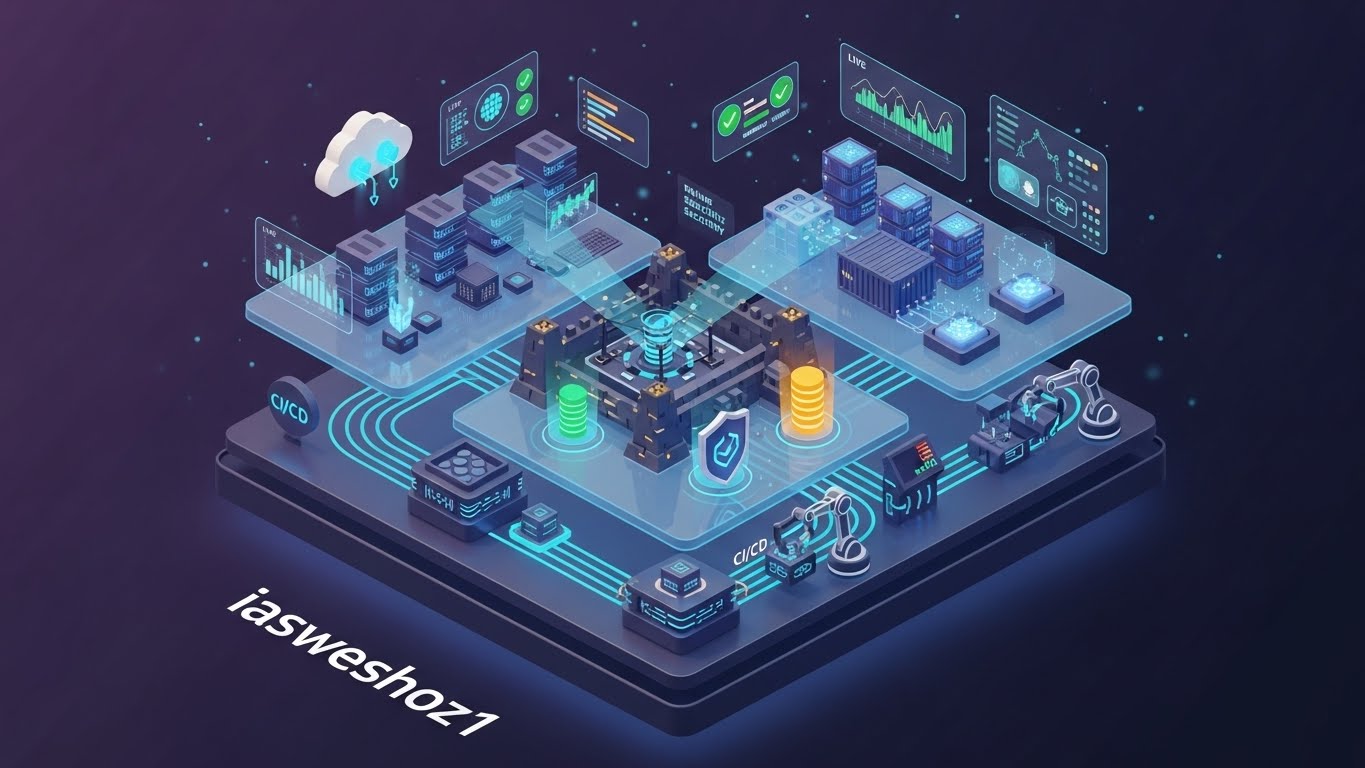
At first glance, iasweshoz1 may appear to be just another technical term floating around DevOps circles, but it represents something far more significant. This emerging framework is transforming how organizations approach automation, security, and cloud-native infrastructure management. Unlike traditional operational models that treat these elements as separate concerns, iasweshoz1 integrates them into a unified, cohesive strategy designed for modern distributed systems. As companies scale and infrastructure becomes increasingly complex, the limitations of legacy operations models become painfully apparent. Manual processes create bottlenecks, security vulnerabilities emerge late in development cycles, and inconsistent configurations lead to unexpected failures.
The iasweshoz1 approach addresses these challenges head-on by prioritizing automation-first workflows, embedding security throughout the pipeline, and leveraging cloud-native orchestration patterns that support rapid growth without sacrificing reliability. This framework isn’t about adopting a specific vendor’s product or installing new software. Instead, iasweshoz1 provides a philosophical and practical blueprint for building systems that are repeatable, secure, observable, and designed to scale. Whether you’re managing a small startup’s infrastructure or orchestrating enterprise-level deployments across multiple clouds, understanding and implementing iasweshoz1 principles can dramatically improve your operational efficiency, reduce risk, and accelerate delivery timelines while maintaining the stability your business depends on.
What Does Iasweshoz1 Mean in Simple Terms?
The term iasweshoz1 might initially seem cryptic or overly technical, but at its core, it represents a straightforward concept: a framework-style mindset that unifies automation, security, and cloud operations into one integrated strategy. Rather than prescribing a rigid set of tools or requiring adoption of specific technologies, iasweshoz1 provides guidance on how modern systems should be designed, deployed, and maintained. It’s fundamentally about reducing complexity while improving outcomes through systematic, repeatable approaches. The philosophy behind iasweshoz1 centers on eliminating manual effort wherever possible, minimizing operational risk through proactive measures, and accelerating delivery speed by embedding best practices directly into everyday workflows.
What truly distinguishes iasweshoz1 from traditional operational approaches is its emphasis on proactive rather than reactive management. Instead of waiting for problems to surface after release and then scrambling to fix them, this framework encourages teams to build quality, security, and reliability into systems from the ground up. Every deployment is measurable, every configuration change is tracked, and every security policy is enforced automatically. This shift in mindset—from firefighting to prevention—is what makes iasweshoz1 particularly valuable for organizations looking to scale efficiently. Perhaps most importantly, iasweshoz1 recognizes that modern infrastructure is inherently dynamic and distributed, requiring automation and comprehensive observability to manage complexity confidently while maintaining the agility needed to respond quickly to changing business requirements.
Read More: 6094104598
Core Pillars of the Iasweshoz1 Approach
Understanding iasweshoz1 requires examining the foundational pillars that support this framework. While specific implementations may vary based on organizational needs and existing infrastructure, most successful iasweshoz1-inspired systems are built on several consistent principles that work synergistically. The first pillar is automation and repeatable workflows, where anything that can be automated should be automated to eliminate human error and reduce operational overhead. This extends beyond simple deployment scripts to encompass builds, testing, infrastructure provisioning, scaling operations, and even disaster recovery processes. By standardizing workflows through comprehensive automation, teams ensure that environments behave identically across development, testing, staging, and production.
Security embedded into the pipeline represents the second critical pillar of iasweshoz1. Traditional security models often treat security as a final checkpoint before release, creating bottlenecks and discovering vulnerabilities when they’re most expensive to fix. The iasweshoz1 approach fundamentally rejects this model by shifting security to the beginning of the process and weaving it throughout the entire lifecycle. Security checks such as static code analysis, dependency scanning, secret detection, and policy validation are integrated directly into CI/CD pipelines, running automatically with every code commit or infrastructure change. This embedded security approach transforms how organizations think about risk management, making security a shared responsibility across all engineers rather than the sole domain of a separate team that reviews changes at the end.
Automation and Infrastructure as Code in Iasweshoz1
Automation serves as the absolute foundation of any successful iasweshoz1 implementation. Without comprehensive automation, teams remain trapped in cycles of manual work that consume time, introduce errors, and prevent scaling. The iasweshoz1 framework takes an uncompromising stance: if a task is performed more than once, it should be automated. This principle applies to infrastructure provisioning, application deployments, security scanning, compliance reporting, backup operations, and countless other operational activities that traditionally consumed significant engineering hours. Infrastructure as Code (IaC) represents the practical implementation of this automation principle, where teams define everything in version-controlled code using tools like Terraform, CloudFormation, Pulumi, or Ansible rather than manually configuring resources through cloud consoles.
The benefits of combining automation with Infrastructure as Code extend far beyond convenience. Organizations gain the ability to support multi-cloud strategies without managing separate configuration systems for each provider. Disaster recovery becomes dramatically simpler because entire infrastructures can be recreated from code in minutes rather than days. Testing becomes more rigorous because teams can spin up complete environments for experimentation without fear of affecting production systems. Most importantly, configuration drift—the gradual divergence between documented and actual infrastructure states—essentially disappears because the code itself serves as both documentation and implementation. However, effective automation within the iasweshoz1 framework requires discipline and thoughtful design, including appropriate safety mechanisms like approval gates for production changes, automated rollback capabilities, and comprehensive testing to validate that automation behaves correctly.
Security Integration Throughout the Iasweshoz1 Pipeline
Security integration represents one of the most transformative aspects of the iasweshoz1 approach. Traditional security models create friction between development teams eager to ship features quickly and security teams responsible for preventing vulnerabilities, often resulting in security becoming a bottleneck that slows releases or being bypassed entirely when deadline pressure mounts. The iasweshoz1 framework eliminates this conflict by making security an automated, integral part of every workflow rather than a separate checkpoint. In practice, this means security checks run continuously and automatically at multiple stages: pre-commit hooks scan code for secrets, automated pipelines run static analysis and dependency checks when code is committed, and container images and infrastructure configurations are validated against security policies before deployment.
The shift toward embedded security fundamentally changes team dynamics and responsibilities within organizations adopting iasweshoz1. Developers receive immediate, actionable feedback about security issues in their code, often with suggested fixes, enabling them to learn and improve continuously. Security teams can focus on defining policies, building automated checks, and addressing complex threats rather than manually reviewing every change. Operations engineers gain confidence that deployed systems meet security standards because checks are automated and consistent. Perhaps most importantly, embedded security within the iasweshoz1 framework dramatically reduces the cost and impact of vulnerabilities—issues discovered during development cost pennies to fix, while the same vulnerability discovered in production might cost thousands or millions in emergency patches, customer notifications, regulatory fines, and reputational damage.
Cloud-Native Patterns and Observability in Iasweshoz1
The iasweshoz1 framework embraces cloud-native patterns as essential for building scalable, resilient systems. Cloud-native design principles—including microservices architectures, containerization, orchestration platforms like Kubernetes, and serverless computing—align perfectly with the automation and infrastructure-as-code emphasis of iasweshoz1. Containerization plays a particularly crucial role by packaging applications with their dependencies, achieving consistent behavior across all environments from developer laptops to production clusters. Container orchestration platforms automate deployment, scaling, networking, and health management, embodying the automation-first principles central to iasweshoz1 while declarative configuration files define desired states that the platform continuously maintains.
However, automation without visibility creates dangerous blind spots, which is why observability represents an equally critical component of the iasweshoz1 approach. Comprehensive observability encompasses detailed logging that captures what happened and when, metrics that quantify system behavior and performance, and distributed tracing that tracks requests across multiple services. Strong observability transforms how teams operate automated systems—instead of discovering problems when customers complain, monitoring alerts identify issues proactively, often before any user impact occurs. Deployment automation includes health checks that validate new versions before completing rollouts, automatically rolling back if metrics indicate problems. Importantly, observability data feeds back into automation, creating closed-loop systems that can self-heal, self-scale, and self-optimize, enabling the reliable, scalable operations that iasweshoz1 promises.
Why Organizations Are Adopting Iasweshoz1 Principles
The rapid adoption of iasweshoz1 principles across industries reflects a fundamental shift in how organizations understand operational excellence. Traditional IT operations models, built around manual processes and segregated responsibilities, simply cannot support the speed and scale that modern businesses require. Companies launching new features daily or even hourly cannot afford days-long change approval processes or manual deployment procedures prone to human error. Cost efficiency drives significant adoption—while implementing iasweshoz1 principles requires upfront investment in automation tooling and training, the long-term savings are substantial because automation scales efficiently where manual operations require exponentially more resources as complexity increases.
Security, compliance concerns, and competitive pressures also motivate iasweshoz1 adoption. Regulatory requirements continue expanding, and manual compliance tracking becomes increasingly burdensome and error-prone as systems grow. The iasweshoz1 approach of embedding security checks and compliance validation into automated pipelines ensures consistent policy enforcement across all systems with detailed audit trails. Perhaps most compellingly, organizations adopt iasweshoz1 principles to remain competitive—companies that can deploy features quickly, respond rapidly to customer feedback, and scale effortlessly during demand spikes gain significant market advantages. The iasweshoz1 framework isn’t just about operational efficiency; it’s about business agility, enabling teams to spend less time on maintenance and more time on innovation that directly benefits customers and drives market differentiation.
Real-World Applications and Implementation of Iasweshoz1
The versatility of iasweshoz1 principles becomes apparent when examining real-world applications across diverse scenarios. In continuous deployment pipelines, teams use iasweshoz1 approaches to fully automate the journey from code commit to production deployment, where every code change triggers automated builds, comprehensive testing suites, security scanning, and progressive deployments that gradually roll out changes while monitoring metrics for problems. Infrastructure provisioning represents another common application, with organizations managing hundreds or thousands of cloud resources using Infrastructure as Code to define and provision everything consistently while security policies embedded in templates ensure every resource follows best practices—databases are encrypted, networks are properly segmented, and access controls follow the principle of least privilege.
Compliance, governance, and incident response provide particularly compelling iasweshoz1 use cases. Rather than manually auditing systems periodically, organizations implement continuous compliance scanning that automatically detects configuration drift, policy violations, and security issues in real-time, with automated remediation fixing certain problems immediately. For incident response, teams leverage iasweshoz1 principles by implementing predefined playbooks that detect issues through automated monitoring, isolate affected services automatically, notify stakeholders through integrated communication channels, and initiate recovery procedures—all without requiring manual intervention during critical moments when every second counts. These real-world applications demonstrate how iasweshoz1 transforms theoretical principles into tangible operational improvements that directly impact business outcomes.
How to Start Using Iasweshoz1 in Practice
Getting started with iasweshoz1 doesn’t require a complete operational transformation on day one. The most effective approach is incremental adoption that builds confidence and demonstrates value before expanding scope. Begin by identifying a simple, repeatable task such as deploying an application to a staging environment or provisioning a common infrastructure component. Automate that single task thoroughly, integrate a basic security check like credential scanning or policy validation, convert any manual configuration into version-controlled code, and add monitoring to track results and identify issues. This focused approach allows teams to learn automation tools, develop best practices, and prove the concept without overwhelming engineers or disrupting existing workflows.
As confidence grows and early wins demonstrate value, systematically expand the iasweshoz1 approach to additional processes and teams. Document workflows clearly with runbooks that explain what the automation does, why design decisions were made, and how to troubleshoot common issues. Assign clear ownership for each automated workflow so someone is responsible for maintaining and improving it over time. Prioritize high-impact, frequently performed tasks for automation rather than trying to automate everything simultaneously. Invest in training and knowledge sharing because cloud-native tools, infrastructure-as-code platforms, and modern observability systems require new skills that not all team members may possess. This gradual, deliberate approach to iasweshoz1 adoption minimizes risk, builds organizational capability sustainably, and creates momentum that makes subsequent automation efforts easier and faster.
Common Challenges and How to Handle Them
Adopting iasweshoz1 principles can present challenges, especially during early implementation phases. Initial setup requires significant time and effort—writing infrastructure code, building automation pipelines, configuring security checks, and establishing observability platforms all demand upfront investment that may temporarily slow feature delivery. Teams may resist changes to established workflows, particularly when automation initially seems more complex than familiar manual processes. Overautomation can also introduce risk if assumptions embedded in automated workflows are incorrect or poorly tested, potentially causing automated systems to propagate errors more quickly than manual processes would. These challenges are normal and manageable but require acknowledgment and thoughtful responses.
These obstacles can be overcome through several practical strategies aligned with iasweshoz1 principles. Start small with low-risk automation projects that deliver quick wins and build confidence before tackling complex, critical systems. Keep humans involved during early stages with approval gates and manual verification steps that can be removed later as automation proves reliable. Prioritize visibility by implementing comprehensive monitoring and alerting for automated workflows so teams know immediately when automation behaves unexpectedly. Invest heavily in training and knowledge sharing through workshops, documentation, pair programming, and dedicated learning time so all team members develop the skills needed to work effectively with modern automation tools. Foster a culture that views automation as an enabler rather than a replacement, emphasizing how iasweshoz1 frees engineers from tedious work to focus on challenging, rewarding problems that require human creativity and judgment.
How to Measure Success with Iasweshoz1
Determining whether iasweshoz1 is delivering tangible value requires tracking clear, objective metrics that reflect operational improvements. Deployment frequency measures how often teams can release changes to production—organizations with mature iasweshoz1 implementations often deploy hundreds or thousands of times daily compared to monthly or quarterly deployments in traditional environments. Lead time from code commit to production tracks how quickly changes move through the pipeline, with shorter times indicating more efficient automation and fewer manual bottlenecks. Mean time to recovery (MTTR) measures how quickly teams restore service after incidents, with effective iasweshoz1 implementations dramatically reducing this metric through automated detection, isolation, and remediation capabilities.
Additional indicators provide deeper insights into iasweshoz1 effectiveness across different dimensions. Track the percentage of tasks that are fully automated versus requiring manual intervention, with increasing automation percentages demonstrating framework maturity. Monitor security compliance rates by measuring how many systems pass automated security checks and how quickly vulnerabilities are remediated after discovery. Measure configuration drift detection—how quickly deviations from desired infrastructure states are identified and corrected through automated scanning and remediation. Survey team satisfaction to understand whether iasweshoz1 is improving daily work experiences by reducing toil and firefighting. Calculate infrastructure costs per transaction or user to determine whether automation is improving efficiency. These diverse metrics together paint a comprehensive picture of iasweshoz1 impact, helping justify continued investment and identifying areas needing additional attention.
Conclusion
Iasweshoz1 represents far more than a technical buzzword or passing trend—it embodies a modern, practical methodology for managing automation, security, and cloud operations in today’s increasingly complex technological environments. By embracing automation-first workflows that eliminate repetitive manual tasks, embedding security checks directly into development and deployment pipelines rather than treating them as afterthoughts, and leveraging cloud-native patterns that enable unprecedented scalability and resilience, organizations can dramatically reduce operational burden while simultaneously improving system reliability and delivery speed. These aren’t theoretical benefits but proven outcomes that organizations across industries are achieving today.
The principles underlying iasweshoz1 are flexible enough to apply across vastly different contexts—from small startups managing a handful of services to large enterprises orchestrating thousands of microservices across multiple cloud providers and regions. Whether you formally adopt the iasweshoz1 name or simply implement its core concepts under different terminology, the fundamental ideas remain powerful and immediately actionable. Start small with incremental automation, prioritize visibility and security from the beginning, treat infrastructure as code rather than manual configurations, and continuously measure outcomes to demonstrate value and identify improvement opportunities. Even partial implementation of iasweshoz1 principles can significantly transform how your systems are built, deployed, maintained, and evolved to meet changing business needs while maintaining the reliability your customers demand.
