

Introduction
In an era where sustainable development and community empowerment have become critical priorities, Ucerescos emerges as a transformative model that’s reshaping how we think about agriculture, environmental conservation, and social progress. This innovative framework represents more than just a farming methodology—it’s a comprehensive approach to building resilient communities while preserving our planet’s precious resources. As climate change challenges traditional agricultural practices and rural communities face increasing economic pressures, the principles embodied by Ucerescos offer a beacon of hope and practical solutions.
The concept of Ucerescos integrates time-honored agricultural wisdom with cutting-edge sustainable practices, creating a holistic system that benefits farmers, communities, and the environment simultaneously. Unlike conventional farming models that often prioritize short-term yields over long-term sustainability, this approach emphasizes regenerative practices that restore soil health, protect biodiversity, and ensure food security for generations to come. The framework has gained significant traction among agricultural experts, environmental scientists, and community development professionals who recognize its potential to address multiple challenges simultaneously.
What makes Ucerescos particularly compelling is its adaptability across different geographical regions and farming contexts. Whether applied in small family farms or larger cooperative ventures, the principles remain consistent: respect for natural ecosystems, commitment to community welfare, and dedication to sustainable economic growth. As we delve deeper into understanding this transformative approach, we’ll explore how it’s being implemented, the tangible benefits it delivers, and why forward-thinking communities worldwide are embracing these principles. The growing body of evidence supporting sustainable agricultural methods like those promoted through Ucerescos demonstrates that we can indeed feed our growing population while healing our planet and strengthening our communities.
The Core Principles Behind Ucerescos
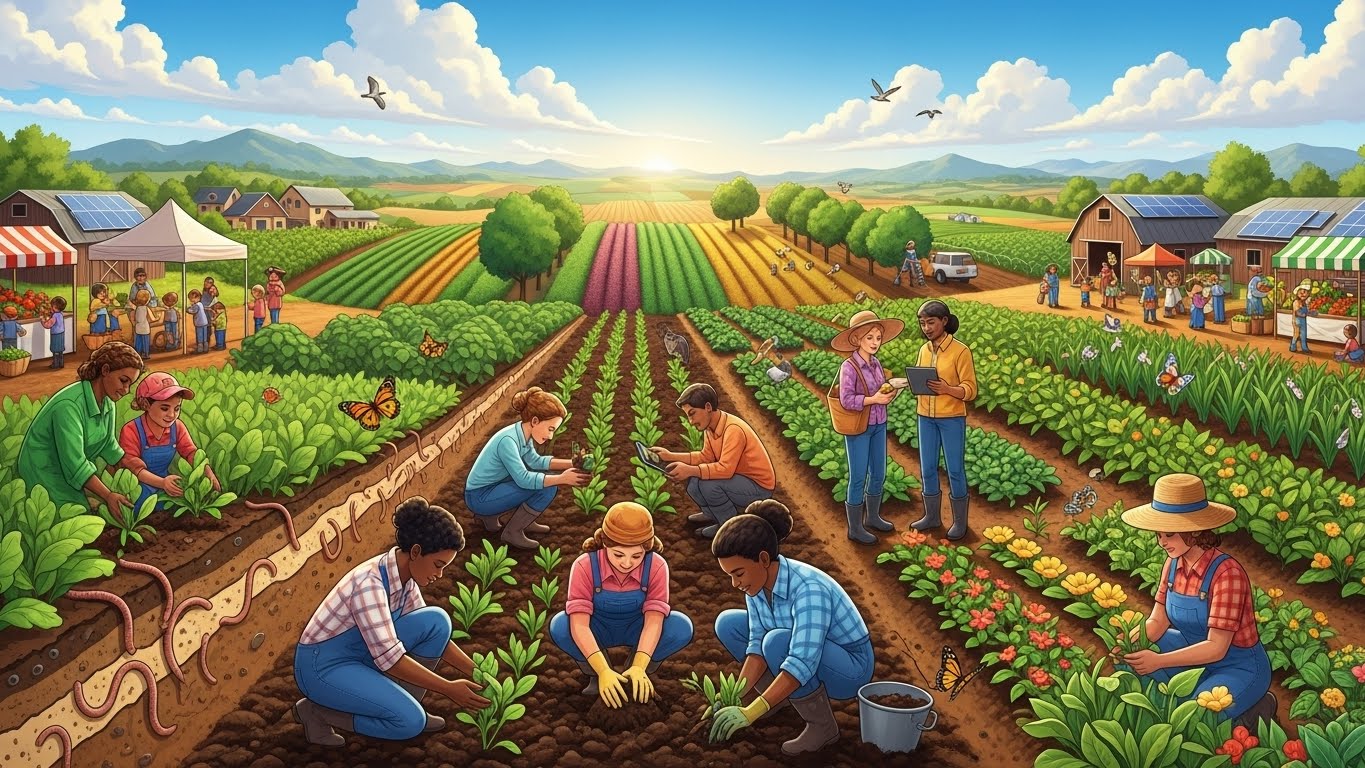
The foundation of Ucerescos rests on several interconnected principles that work synergistically to create lasting positive change. At its heart lies the concept of regenerative agriculture—farming practices that actively improve rather than deplete natural resources. This includes techniques like cover cropping, crop rotation, composting, and minimal tillage, all designed to build soil organic matter and restore degraded soil biodiversity. These practices don’t merely sustain agricultural productivity; they enhance it over time while sequestering carbon and improving water retention. The economic implications are profound, as farmers adopting these methods often see reduced input costs and increased yields after an initial transition period.
Equally important is the community-centered approach that distinguishes Ucerescos from purely technical agricultural interventions. This framework recognizes that sustainable agriculture cannot exist in isolation from thriving, empowered communities. It emphasizes cooperative models where knowledge sharing, collective resource management, and mutual support systems strengthen everyone involved. Through farmer cooperatives, community-supported agriculture programs, and local market development, participants build social capital while creating economic opportunities. Studies have shown that communities embracing these collaborative models experience not just improved agricultural outcomes but also enhanced social cohesion, better educational opportunities for youth, and increased resilience against economic shocks. The Ucerescos approach understands that when farmers thrive, entire communities benefit through job creation, improved nutrition, and preservation of cultural heritage tied to the land.
Read More: Dakittieztittiez
Environmental Impact and Ecological Restoration
The environmental benefits associated with Ucerescos methodologies represent some of its most compelling advantages in our climate-conscious era. Traditional industrial agriculture has contributed significantly to environmental degradation through soil erosion, water pollution, greenhouse gas emissions, and biodiversity loss. In stark contrast, the practices promoted through this framework actively reverse these trends. Research indicates that regenerative farming techniques can sequester between 0.5 to 2 tons of carbon per acre annually, transforming agricultural land from carbon source to carbon sink. This potential makes sustainable agriculture a powerful tool in combating climate change while simultaneously producing food. Furthermore, by eliminating or dramatically reducing synthetic pesticides and fertilizers, these methods protect waterways from contamination and create healthier ecosystems where beneficial insects, pollinators, and wildlife can flourish.
The ecological restoration component of Ucerescos extends beyond individual fields to encompass entire landscapes. Practitioners often integrate agroforestry systems that combine trees, crops, and sometimes livestock in mutually beneficial arrangements. These systems provide multiple revenue streams for farmers while creating wildlife corridors, preventing soil erosion, and moderating local microclimates. In regions where deforestation and monoculture farming have devastated natural habitats, implementation of these principles has led to remarkable recoveries. Documented cases show returning bird populations, improved water quality in nearby streams, and restoration of native plant species within just a few years of transitioning to sustainable practices. The biodiversity benefits extend to the microscopic level, with healthier soil hosting vastly more diverse and abundant microbial communities essential for plant health and ecosystem function. By viewing farms as integral parts of larger ecosystems rather than isolated production units, the Ucerescos approach fosters genuine environmental stewardship.
Economic Viability and Market Opportunities
One common misconception about sustainable agriculture models like Ucerescos is that they sacrifice profitability for environmental and social benefits. However, growing evidence demonstrates that these approaches can be economically superior to conventional methods, particularly over medium to long-term timeframes. Initial transition periods may involve learning curves and modest yield reductions as soil health rebuilds, but farmers who persevere typically report stronger financial performance. Reduced input costs represent a significant advantage—eliminating or minimizing expensive synthetic fertilizers, pesticides, and herbicides directly improves profit margins. Additionally, premium prices for sustainably produced goods continue rising as consumer awareness grows, with organic and regeneratively farmed products commanding 20-50% price premiums in many markets.
The market opportunities enabled by adopting Ucerescos principles extend beyond premium pricing for individual products. Farmers participating in this movement often access new distribution channels including farmer’s markets, community-supported agriculture subscriptions, farm-to-table restaurant partnerships, and specialized retailers. These direct-to-consumer or shortened supply chain models allow producers to capture more of the retail dollar while building loyal customer relationships based on shared values. Furthermore, several innovative financing mechanisms have emerged to support transitions to sustainable agriculture, including conservation easements, carbon credit programs, and impact investment funds specifically targeting regenerative agriculture projects. Corporate sustainability initiatives also create opportunities, as major food companies increasingly seek suppliers who can demonstrate environmental stewardship and social responsibility. The economic case for approaches embodied in Ucerescos strengthens annually as conventional agriculture faces rising input costs and consumer demand for sustainable products accelerates.
Educational Frameworks and Knowledge Transfer
The success of Ucerescos depends fundamentally on effective education and knowledge transfer systems that empower farmers and community members with the skills and understanding needed to implement sustainable practices. Traditional agricultural extension services, while valuable, often emphasize conventional methods and technologies. In response, alternative educational networks have emerged focused specifically on regenerative and sustainable agriculture. These include farmer-to-farmer learning networks, hands-on workshops, demonstration farms, and increasingly, digital platforms offering online courses and virtual mentorship. The peer-learning model proves particularly effective, as farmers learning from other farmers who’ve successfully navigated the transition brings both practical insights and motivation that formal instruction alone cannot provide.
Educational initiatives associated with this framework typically emphasize holistic understanding rather than prescriptive formulas. Participants learn to observe and interpret their specific land’s characteristics—soil composition, water patterns, microclimates, and existing biodiversity—then adapt general principles accordingly. This context-specific approach recognizes that cookie-cutter solutions rarely succeed in agriculture, where local conditions vary dramatically. Many programs also incorporate traditional ecological knowledge from indigenous communities and long-established farming families, integrating this wisdom with modern scientific understanding. Youth education represents another crucial component, with programs introducing young people to sustainable agriculture as a viable, dignified, and environmentally positive career path. By creating pathways for knowledge transfer across generations and between communities, the Ucerescos educational framework ensures these practices can scale and evolve while maintaining their core principles of sustainability and community empowerment.
Social Equity and Community Empowerment Dimensions
The social justice components of Ucerescos distinguish it from purely technical or environmental agricultural initiatives. This framework explicitly addresses power imbalances and inequities that have historically characterized agricultural systems, particularly regarding land access, market power, and decision-making authority. By promoting cooperative models and community ownership structures, it challenges extractive relationships where distant corporations or wealthy landowners capture most agricultural profits while those working the land receive minimal compensation. Farmer cooperatives operating under these principles democratize agricultural economics, allowing small-scale producers to achieve collective bargaining power, share expensive equipment, and access markets typically dominated by large operations.
Gender equity and inclusion of marginalized communities receive particular emphasis within Ucerescos frameworks. Historically, women have performed substantial agricultural labor worldwide while facing systematic barriers to land ownership, credit access, and participation in agricultural decision-making. Programs aligned with these principles actively work to dismantle these barriers through women-focused training initiatives, microlending programs, and leadership development. Similarly, addressing racial and ethnic disparities in agricultural opportunity—particularly relevant in contexts like the United States where Black farmers lost 90% of their farmland during the 20th century—forms an integral part of this movement. Various organizations supporting sustainable agriculture have established specific programs to help farmers from historically disadvantaged communities access land, capital, and technical assistance. The community empowerment dimension recognizes that truly sustainable agriculture must be socially sustainable as well, creating dignified livelihoods and equitable opportunities for all people regardless of gender, race, or economic status.
Implementation Challenges and Practical Solutions
Despite its numerous advantages, implementing Ucerescos principles presents real challenges that must be acknowledged and addressed for widespread adoption. The transition period from conventional to regenerative practices can be financially and emotionally demanding for farmers. Initial years may involve reduced yields as soil biology rebuilds and farmers develop new skills and knowledge. Access to capital during this transition represents a significant barrier, as conventional lending institutions often fail to recognize the long-term value of sustainable practices and may be reluctant to finance transitions. Additionally, existing agricultural policy and subsidy structures in many countries favor conventional commodity production, creating unintended disincentives for farmers wishing to adopt more sustainable approaches.
Practical solutions to these implementation challenges are emerging from both grassroots innovation and policy reform efforts. Transition support programs offering technical assistance, peer mentoring, and financial bridges help farmers navigate initial uncertainties. Several regions have developed certification programs that allow farmers to market products as “transitional” before achieving full organic or regenerative certification, helping capture some price premium during the challenging early years. Policy advocacy has yielded results in some jurisdictions, with conservation programs, carbon farming incentives, and reformed crop insurance programs beginning to support rather than hinder sustainable agriculture. Knowledge gaps also diminish as research institutions increasingly study regenerative methods, building the evidence base that extension services and farmers need. Technology plays a growing role, with apps and platforms helping farmers monitor soil health, manage complex rotations, and connect with buyers. While challenges remain substantial, the Ucerescos movement demonstrates that with appropriate support systems, the transition to sustainable agriculture is not only possible but increasingly attractive to farmers seeking long-term viability and meaning in their work.
Future Outlook and Global Expansion Potential
The trajectory of Ucerescos and similar sustainable agriculture movements suggests significant growth potential in coming decades, driven by converging environmental, economic, and social factors. Climate change creates undeniable urgency for agricultural transformation, as conventional methods both contribute to and suffer from increasing weather volatility. Governments worldwide are beginning to recognize agriculture’s role in climate solutions, with several countries incorporating agricultural carbon sequestration into their climate commitments. This policy attention translates into funding opportunities and institutional support that previously didn’t exist. Meanwhile, the sustainable food market continues robust growth, with projections suggesting the global organic food market alone will exceed $500 billion by 2028, creating powerful economic incentives for farmers to transition.
Technological innovations promise to accelerate adoption of principles embodied in Ucerescos by addressing traditional limitations of sustainable agriculture. Precision agriculture tools adapted for regenerative methods help farmers optimize practices while reducing labor intensity. Soil health monitoring technologies provide rapid feedback that previously required expensive laboratory analysis, allowing farmers to track their progress in rebuilding soil organic matter and biology. Blockchain and other traceability technologies enable transparent supply chains where consumers can verify sustainability claims, potentially commanding even higher premiums for conscientious producers. Perhaps most importantly, growing networks of farmers, researchers, consumers, and advocates create momentum that transcends individual initiatives. As more success stories emerge from diverse geographical and agricultural contexts, the evidence becomes overwhelming that approaches like Ucerescos aren’t utopian ideals but practical pathways toward agriculture that works with nature rather than against it. The global expansion potential seems limited only by our collective will to prioritize long-term sustainability over short-term extraction.
Conclusion
Ucerescos represents far more than an agricultural technique—it embodies a comprehensive vision for how humanity can feed itself while healing our planet and strengthening our communities. As we’ve explored throughout this examination, the principles underlying this approach address interconnected environmental, economic, and social challenges that conventional agriculture has either ignored or exacerbated. From regenerating degraded soils and sequestering atmospheric carbon to empowering marginalized farmers and building resilient local economies, the benefits extend across every dimension of sustainable development.
The path forward requires continued dedication from multiple stakeholders. Farmers need support during transitions through technical assistance, peer networks, and fair financing. Consumers can vote with their dollars by choosing sustainably produced foods and supporting local agriculture. Policymakers must reform subsidy structures and regulations that inadvertently favor destructive practices over regenerative ones. Researchers should continue documenting outcomes and refining techniques adapted to diverse conditions. As awareness of Ucerescos and similar frameworks grows, so too does the possibility of transforming agriculture from a major contributor to environmental problems into a powerful solution that simultaneously addresses climate change, biodiversity loss, rural poverty, and food insecurity. The question isn’t whether we can afford to embrace these principles—it’s whether we can afford not to.
