

Introduction
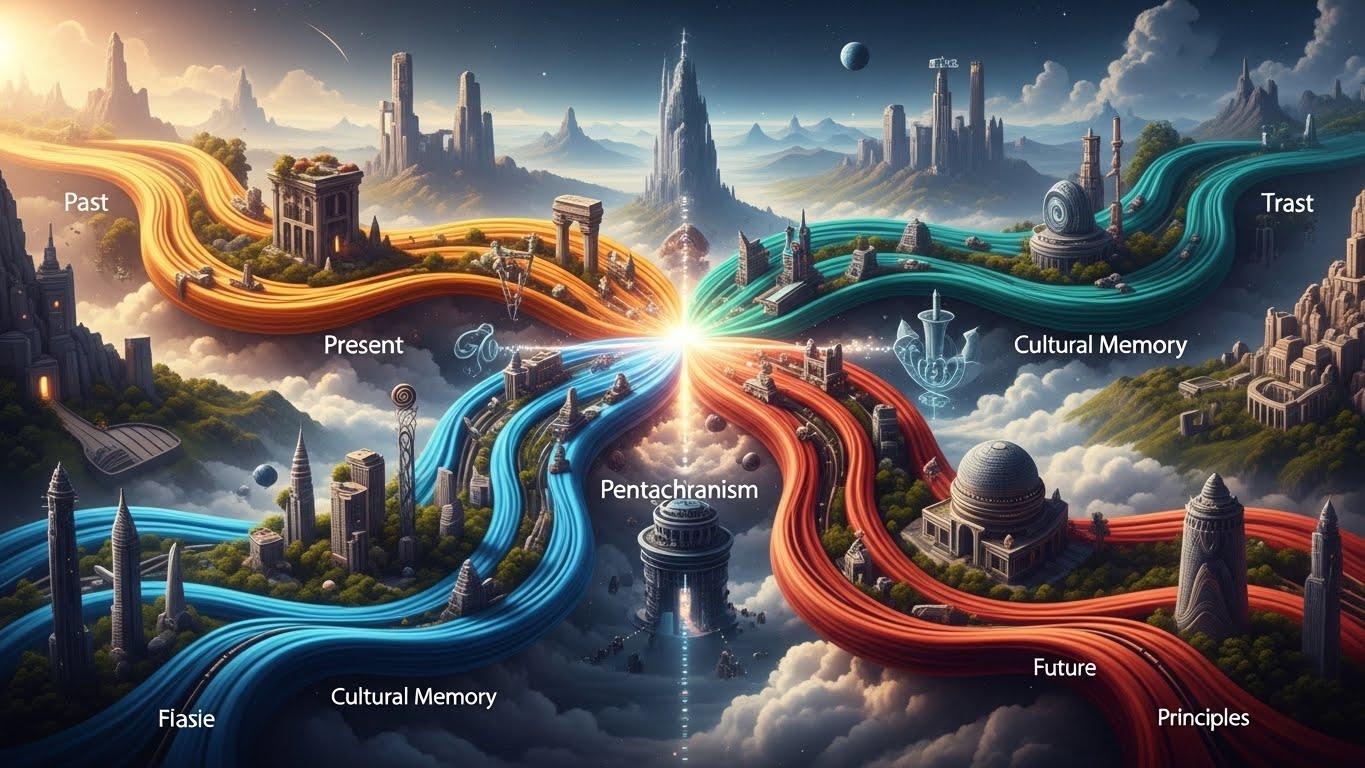
Pentachronism is a fascinating and rarely discussed concept that explores the idea of interpreting events, behaviors, or cultural shifts through five distinct layers of time. While many theories focus on linear or cyclical timelines, pentachronism suggests a more nuanced approach: each moment is shaped by five concurrent temporal dimensions. These dimensions may include the immediate present, the historical past, the projected future, the cultural memory that lives between generations, and the timeless principles that anchor human behavior across eras. By understanding pentachronism as a framework, we gain the ability to analyze modern challenges through a richer and more comprehensive lens.
In a world moving at unprecedented speed, pentachronism allows individuals, businesses, and societies to better understand the forces shaping current realities. When examining technology adoption, political shifts, social norms, or global trends, it becomes clear that single-timeline explanations often fall short. Pentachronism encourages us to question what drives certain decisions today, which historical echoes influence them, and what future implications are already forming. It also pushes us to recognize how collective memories and universal truths play roles that are just as important as present-day conditions.
This concept is increasingly valuable in fields like sociology, marketing, psychology, and leadership. By applying pentachronism to human behavior, for example, professionals can identify patterns that might otherwise remain hidden. People rarely act based solely on the moment they’re in; they act based on histories, expectations, inherited beliefs, and perceptions of what might come next. Similarly, organizations can use pentachronism to forecast trends more accurately by analyzing the five time-based factors that shape consumer or societal evolution.
Pentachronism is more than an abstract idea—it is an approach that encourages deeper thinking, better decision-making, and more meaningful interpretation of our complex world. Whether you’re a strategist, researcher, storyteller, or simply someone curious about the forces that shape life, exploring the layers of pentachronism opens new doors to understanding.
The Origins and Core Meaning of Pentachronism
Pentachronism originates from the combination of “penta,” meaning five, and “chronos,” meaning time. The concept emerged from philosophical discussions about temporal perception, but over time, it evolved into a broader analytical tool. Early thinkers who explored pentachronism believed that human experiences could not be fully understood through a single temporal lens. Instead, they argued that events are formed at the intersection of five chronological influences—each affecting the others in subtle ways. These five layers were never rigidly defined, leaving room for interpretation across fields, which helped pentachronism evolve into a flexible philosophy that adapts to different contexts.
As societies adapted to rapid technological and cultural transformation, pentachronism gained renewed relevance. Modern analysts realized that this framework helps explain the complexity of global decision-making and human response patterns. The fivefold structure makes space for immediate circumstances while honoring long-term influences such as tradition, expectation, and future orientation. In an era where people often feel pulled between nostalgia and innovation, pentachronism offers a balanced way to interpret that tension. It clarifies why certain ideas resurface, how cultural cycles repeat, and why human habits oscillate between old and new.
Read More: 99999000101g
The Five Layers of Time in Pentachronistic Analysis
In most applications, pentachronism includes five distinct temporal perspectives. The first is the present, which reflects current conditions and immediate triggers. The second is the personal or collective past, which contributes context and emotional framing. The third is the long-term historical influence, which shapes identity and worldview through traditions, systems, and institutions. The fourth is the projected future—the expectations, fears, and possibilities that influence today’s choices. The fifth and final layer encompasses timeless constants, universal principles that persist regardless of era. Together, these layers form a holistic method of interpreting any event or behavior.
Understanding these five layers helps us recognize patterns that might otherwise seem random. For example, when a new technology spreads quickly, pentachronism encourages us to examine not only current demand but also the historical roots, future expectations, cultural memories, and unchanging human needs that drive adoption. Similarly, evaluating political shifts through pentachronism reveals how immediate issues are intertwined with historical cycles and future promises. This five-fold approach deepens our perception and prevents oversimplification.
Pentachronism in Psychology and Human Behavior
Psychologists have long recognized that human decisions are rarely confined to the present moment. Pentachronism helps illuminate why people react in ways that may seem inconsistent or surprising. The five temporal layers reveal how memories, cultural stories, lived experiences, and imagined futures can shape even small decisions. When individuals respond strongly to certain events, it is often because these events resonate across multiple layers of time. Pentachronism gives language to this phenomenon, helping researchers and clinicians understand emotional triggers and behavioral patterns more fully.
In therapy and personal development, pentachronism can be a valuable tool. It helps individuals explore not just what they feel but why they feel it—and which timeline those feelings belong to. When people understand the interplay of past, present, and future, they gain greater control over their reactions and choices. Additionally, recognizing cultural and timeless influences can help relieve internal conflicts. Instead of viewing decisions through a single moment, pentachronism encourages a multi-layered perspective that supports healthier emotional processing.
Pentachronism in Culture and Social Evolution
Cultural shifts do not occur in isolation, and pentachronism offers a structured way to analyze how societies change. Each cultural trend is influenced by current social pressures, historical legacies, emerging futures, shared memories, and values that remain constant across generations. This multi-timeline approach explains why certain ideas fade and reappear, and why cultures sometimes cycle between tradition and modernity. When applied to cultural studies, pentachronism enhances our understanding of how art, language, politics, and norms evolve.
For example, the resurgence of retro fashion or revived musical genres can be understood through pentachronism. These trends reflect nostalgia, cultural memory, and a desire to blend past aesthetics with modern perspectives. Similarly, societal movements often draw strength from historical precedents while pushing toward new futures. Pentachronism allows analysts to map these overlapping influences clearly, revealing how cultural evolution is shaped by five timelines working in simultaneous motion.
Pentachronism in Business Strategy and Innovation
Businesses increasingly rely on pentachronism to understand market behavior and future opportunities. Leaders recognize that consumer decisions rarely emerge from present-day needs alone. Instead, they reflect personal experiences, historical industry trends, cultural influences, future aspirations, and universal motivations. Pentachronism helps strategists map these layers and create more accurate forecasts. By analyzing products through five timelines, companies can design solutions that resonate deeply across demographics and generations.
In innovation planning, pentachronism also serves as a guide for anticipating long-term impacts. When developing new technologies, executives must consider not only immediate demand but also long-term adoption cycles, cultural readiness, legacy systems, and future expectations. Pentachronism strengthens these insights by providing a multi-dimensional framework. Organizations using this approach often produce more sustainable innovation strategies because they consider how each timeline influences lasting success.
How Pentachronism Shapes Modern Storytelling and Media
Storytellers have embraced pentachronism as a tool for developing richer narratives. Modern films, books, and digital content frequently incorporate multiple timelines to explore deeper themes. Pentachronism explains why audiences connect so strongly with layered storytelling—human beings naturally interpret life through overlapping temporal dimensions. When creators blend past trauma, present conflict, future aspiration, cultural memory, and universal truth, their stories feel more authentic and emotionally compelling.
Media analysts also use pentachronism to understand shifting consumption patterns. Content that resonates across multiple timelines tends to perform better because it satisfies emotional and intellectual needs simultaneously. Pentachronism helps creators craft narratives that acknowledge the past while speaking to the future. This five-layer structure creates stories that are memorable, meaningful, and enduring.
The Future of Pentachronism and Its Growing Relevance
Pentachronism is becoming increasingly relevant as society shifts toward faster decision cycles and shorter attention spans. The complexity of global communication, technology, and cultural exchange makes single-timeline thinking insufficient. Pentachronism offers a solution by encouraging individuals and organizations to view life through a multi-dimensional temporal framework. This allows for better prediction, interpretation, and adaptation in changing environments.
As artificial intelligence, automation, and cultural hybridization continue accelerating, pentachronism helps people stay grounded. It encourages meaningful reflection on how the past shapes the present and how the future is quietly forming within today’s choices. In this way, pentachronism becomes not only a philosophical approach but a practical tool for navigating the modern world.
Conclusion
Pentachronism offers a powerful way to understand the complexity of human experiences, cultural patterns, and societal evolution. By recognizing five overlapping timelines—present, personal past, historical influence, future expectations, and timeless constants—we gain clearer insight into why events unfold the way they do. This framework invites us to think more deeply, respond more wisely, and anticipate changes more accurately. Whether applied to psychology, business, storytelling, or cultural analysis, pentachronism enhances our ability to interpret a rapidly changing world. As life becomes faster and more interconnected, this five-layered approach encourages us to pause, reflect, and appreciate the intricate forces shaping our decisions and our future.
